
Forensic Image Analysis
An image can tell more than it shows. Explore how its origin, authenticity and signs of editing are examined to interpret photographic evidence.
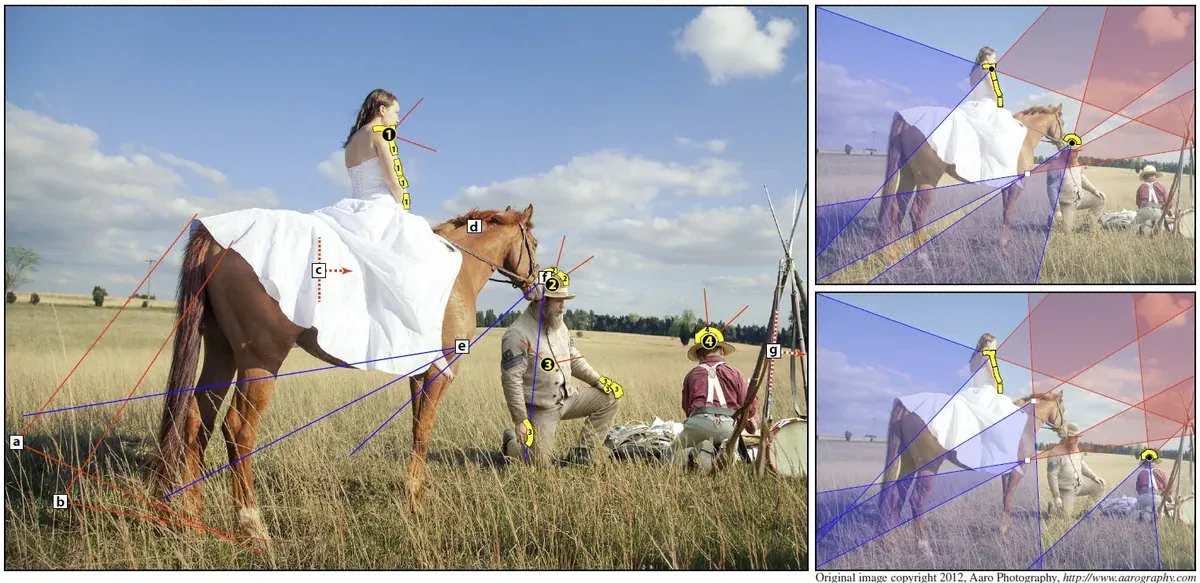
Photographing evidence is one of the most common tasks in forensic investigation.
Forensic image analysis can be defined as the science concerned with the scientific and technical skills used to analyze and investigate photographic evidence, both digital and photochemical. It involves interpreting and determining its origin and authorship, the relationship between an image and the camera used to capture it, and the authenticity of the image itself, whether it has been manipulated, and therefore its evidentiary value.
A challenge for forensic experts
Forensic image analysis is one of the greatest challenges in technology-related expert work due to the absence of standardized protocols, the scarcity and ineffectiveness of software tools, and the widespread lack of understanding of the scientific and technological principles underlying digital image formation. Far from being a pessimistic view, this shows that there is a fascinating opportunity for the scientific community. Evidence of this can be found in the numerous image analysis studies, which are growing exponentially year after year and establishing the theoretical foundation for new analysis methods.
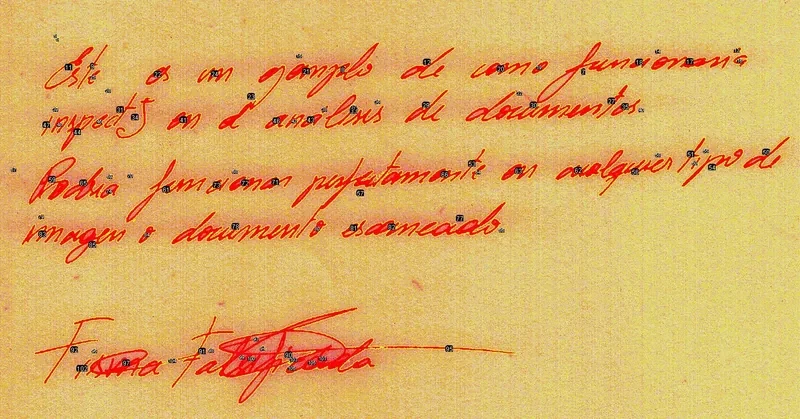
Much of the lack of methods is due to the fact that forensic image analysis currently falls within the field of digital forensics, treating the image as digital evidence. While this is true to some extent, the expert examination of digital images requires analysis beyond the files' computational properties. It requires a holistic study encompassing the full range of technologies underpinning photography: geometric and wave optics, the study of CCD and CMOS sensor hardware, color interpolation calculations, the conversion of the sensor's analog signal into Raster RGB digital images, compression systems, visual artifacts, photogrammetry, etc. Only in this way can we overcome the new challenges posed by this new era of decentralized information.
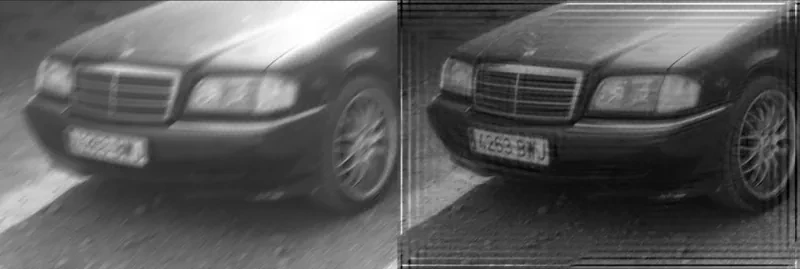
The objectives of forensic image examination are to establish a scientific method for determining causes and their origins, helping judicial authorities understand and analyze them with the highest degree of assurance.
The objectives of forensic image analysis can be divided into three groups:
- Image authentication and origin—the English term used for this type of analysis is “camera ballistics”—
- Obtain information from both the computer file and the image itself.
- Preserve evidence and present it with the highest possible assurance, maintaining the chain of custody at all times.
Methodological assurance
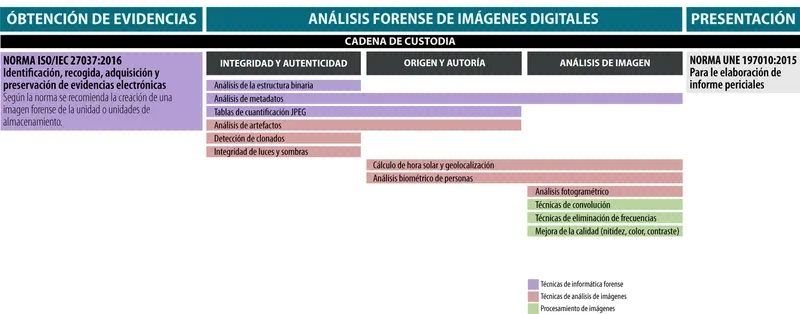
Digital evidence is obtained in accordance with the guidelines for the identification, collection, acquisition and preservation of electronic evidence set out in ISO/IEC 27037:2016. The standard recommends creating a forensic image of the memory of the device containing the relevant information. Subsequent analysis of this memory can recover data that has been deleted accidentally or intentionally.
Based on the results obtained and the prior assessment of each case, a clear and concise report will document all the evidence and expert analyses undertaken, providing legal evidence with the highest possible assurance to support the assessment of the work. The report will be prepared in accordance with UNE 197010:2015 and drawing on the extensive experience of our experts, providing the highest possible assurance for any subsequent legal proceedings.
Objectives of forensic image analysis
Forensic image analysis offers a wide range of possibilities for examining photographic evidence. Its main functions include:
Identification and classification of evidence.
- Cloning of storage media.
- Encrypted digital custody.
- Verification that photographic images and video have not been manipulated.
- Analysis of image integrity: detection of cloning, photomontages, image artifacts, etc.
Information retrieval.
- Precise measurements: photogrammetric analysis, orthophotographs.
- Identification of individuals: biometric analysis.
- Retrieval of hidden data: steganography.
- Metadata analysis: operating system information, e-mail metadata, analysis of light and shadows.
Image enhancement.
- Removal of blur and motion effects: convolution techniques, levels adjustment, etc.
- Removal of patterns and textures: Fourier transform calculation.
Unambiguously link the image to its source.
- Determine the origin and authorship of the image.
- Metadata analysis and logical and binary analysis of the file.
- Verification that any photographic or video image has not been manipulated
- Artifact analysis.
Scope of the examination
The analysis is designed around a specific question and the material available. Observations, comparative tests and methods appropriate to the case are combined, with operations and limitations documented. The results may support a hypothesis, provide grounds for ruling it out, or be inconclusive. File preservation, provenance and scene interpretation are related matters that must be examined separately.
The following fields expand the possibilities for examining photography and video. Their specific application is assessed according to the case, the material available and the expertise required.
Scene, capture and file
Where do we look for information?
A photograph represents a scene, but it is also the result of a capture process and operations performed on a file.
Conceptual illustration · Fictional scene
-
01 · Scene
Content, geometry, light and shadows. Are the visible elements consistent with the attributed context?
-
02 · Capture
Optics, sensor and in-camera processing. What traces does the image retain of how it was captured?
-
03 · File
Metadata, thumbnails, encoding and compression. What information does this copy contain?
-
04 · Analysis
Comparison with references using appropriate methods. Which hypotheses do the results support, and within what limits?
The file and traces of its creation
1. File structure, metadata and compression
A file may retain information about its capture, format and some of the transformations it has undergone. Examining headers, EXIF, IPTC or XMP metadata, thumbnails and compression characteristics allows this information to be cross-checked and inconsistencies to be identified. The evidence is interpreted as a whole: a date recorded in the metadata does not, by itself, prove when the scene was captured, and recompression does not necessarily imply deceptive manipulation.
Example: compare the received file with a copy exported for a social network.
2. Local manipulations and traces of processing
Analysis can look for duplicated regions, added or removed elements, and differences in traces of interpolation, resampling, noise or editing. Matches and localization maps help identify areas that require examination. Their interpretation must consider repetitive textures, normal camera processing and other causes that may produce similar results.
Example: examine whether a region comes from another part of the image by comparing matches and structure.
3. Physical and optical consistency of the scene
Lighting, shadows, reflections, perspective and optical effects provide information about how an image was formed. Studying them makes it possible to assess whether different elements are consistent with particular capture conditions. Conclusions depend on the assumptions used and on factors such as the presence of multiple light sources or non-planar surfaces.
Example: compare the direction of shadows with the geometry of objects.
Origin and provenance
4. Examination of cameras, sensors and capture devices
Some images retain patterns related to the sensor and the device's processing. Comparing them with reference images can provide indications about the source camera or relationships between files. Quality, transformations undergone and possible patterns shared among devices must be considered. Linking an image to a camera is different from identifying the person who used it.
Example: compare a questioned file with control images captured using several devices.
5. Verifiable provenance and content credentials
When C2PA credentials are present, it is possible to examine signed assertions about a file's origin and edits, their binding to the content and the trustworthiness of the signer. This information complements the examination of the image. A valid credential does not, by itself, prove that the scene is truthful; its absence does not prove that an image is false either.
Example: trace a capture and its edited versions, distinguishing verified information from undocumented steps.
Provenance and C2PA
Which part of the story can we verify?
Credentials can link a file to signed assertions about its origin and changes. Their availability and the validation result must be examined separately.
Explore three scenarios
-
01
Capture
File A with a signed assertion.
-
02
Documented editing
File B: declared changes and reference to the source.
-
03
Examination of the copy
Link, signature and trust verified in this scenario.
There is a way to verify provenance.
In this scenario, the assertions are linked to the file, and the signature and its trustworthiness have been verified. This allows the declared provenance to be examined; it does not by itself prove that what is depicted actually happened.
This means of verification is not available.
In this scenario, the copy does not provide an accessible credential. That does not prove it is false. Other versions can be requested, and metadata, processing traces and context can be examined.
The binding to the file fails.
The content received does not match the cryptographic binding examined. What changed and why must be investigated. This failure does not by itself establish the intent behind a modification or the truthfulness of the scene.
AI-generated or altered video and images
6. Forensic video analysis and temporal continuity
Analysis of the file and the sequence of frames allows for the examination of skips, repetitions and changes in speed. These observations are assessed against the recording system: a discontinuity may have technical causes and does not, by itself, demonstrate that editing has occurred.
7. Synthetic images, generative fill and deepfakes
The complete generation of an image, the replacement of a face and the modification of a region raise different questions. Their examination may combine provenance, technical traces, visual and temporal consistency, and detection tools evaluated for the material received. A detector's performance depends, among other factors, on the generators and transformations considered in its evaluation. It may be necessary to conclude that the available information is insufficient.
Example: compare a generated image and a control photograph subjected to the same compression.
Information contained in the scene
8. Image enhancement and quality assessment
Contrast adjustment, noise processing, stabilization and certain blur corrections can facilitate the examination of recorded information. The operations are documented and the original is preserved to assess which details are stable and what limitations remain. Enhancement does not guarantee the recovery of lost information; details created through artificial generation are not presented as observations from the original file.
Example: show a detail before and after documented processing.
9. Photogrammetry and scene measurement
Images can allow dimensions, positions and spatial relationships to be estimated when sufficient references and geometric conditions are available. The analysis considers perspective, calibration, optical distortion and measurement uncertainty. It explains what data support the estimate and when the images do not permit a defensible measurement.
Example: estimate a dimension on a reference plane identified in the scene.
10. Comparison of people, objects and visible features
Comparison examines similarities and differences between images, taking into account resolution, pose, perspective and lighting. It can be applied to facial features and characteristics of clothing, vehicles or objects. In facial comparison, morphological evaluation and technical review must be distinguished from an automated search for candidates. The scope of the conclusion depends on the information visible and the method used.
Example: document which characteristics allow two images to be compared and which cannot be assessed.
11. Context, geolocation and temporal consistency
Comparison with other images, elements of the scene and documented sources can help assess the location or context attributed to a photograph or video. Position and time data are studied alongside visual information; where appropriate, the compatibility of shadows with hypotheses about solar illumination is also examined. An unaltered image may have been shared with an incorrect description.
Example: investigate whether a photograph corresponds to the place and time with which it is presented.
Specialized applications
12. Infrared, ultraviolet and multispectral imaging
Capture under controlled lighting and filtering conditions allows differences that are not visible in a conventional photograph to be studied. It can contribute to the examination of documents, materials and certain traces. It requires appropriate acquisition and specialist evaluation: an infrared image cannot be obtained by applying a color filter to a visible-light photograph, and an optical response alone does not identify a substance.
Example: compare images of the same sample captured under different conditions.
13. Scientific image integrity
Laboratory figures and publications can be examined to identify reuse, duplication, composites and adjustments that affect their interpretation. Comparison can encompass different panels or documents and be checked against the acquisition files. Detecting a match or anomaly raises a question that must be investigated; it does not by itself establish its cause or the intent of the person who prepared the figure.
Example: locate the same region in two panels presented as different observations.
14. Steganalysis and hidden data
Some files may contain information that does not appear in their normal display. Examination of their structure and certain signal properties can help investigate signs of concealment or the presence of known watermarks. The ability to detect and recover such data depends on the procedure used and the preservation of the file; a negative result from one tool does not rule out all concealment methods.
Example: explain the difference between metadata visible to a reader, information hidden in the signal and a mark designed to be detected.
Guidelines and further reading
The literature and professional guidelines help put each technique, its conditions of application and its limitations into context.
- SWGDE: best practices for image authentication.
- SWGDE: best practices for digital video authentication.
- C2PA: provenance and content credential specifications.
- FISWG: overview and methodology for facial comparison.
Research on camera fingerprints, AI and scientific integrity
- Iuliani, Fontani and Piva: limits to the uniqueness of PRNU fingerprints.
- Guillaro and colleagues: TruFor, manipulation detection and localization.
- Park and Owens: Community Forensics and generalization in synthetic image detection.
- Criminisi, Reid and Zisserman: measurement from a single view.
- Bucci: detection of image manipulation in biomedical literature.
These fields are related to forensic document examination, the forensic photography and artwork photography. To explore the methods and their application in greater depth, consult the forensic image analysis course.
Inquire about Forensic Image Analysis ↗
Explore other specialties
All scientific and forensic imaging specialties · Meet AEICF members