
Fine Art Photography
Documentation and study of artworks using high-fidelity photography and multispectral imaging techniques.
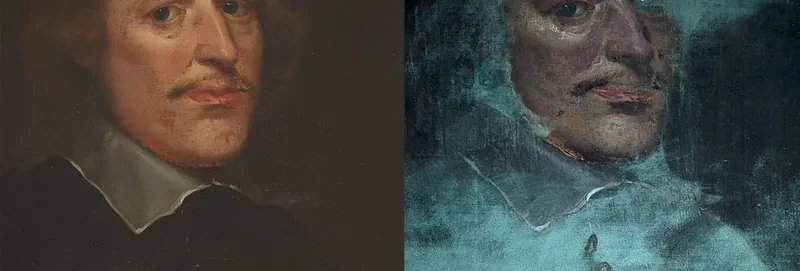
By art photography, we mean photography aimed at understanding or preserving cultural property and heritage through digital imaging.
Thus, this type of photography is used for various purposes:
- As part of a diagnostic process for the cultural asset, to understand the factors and mechanisms causing its deterioration and assess its state of conservation.
- To understand the technique used by the artist and thus often help establish the authorship of a work. Indeed, these techniques are commonly used in the expert examination and attribution of artworks.
- To preserve information about a work of art or cultural asset in digital format—that is, to digitize it so that it can be understood or studied in the future, or even used to create a facsimile or reproduction.
The photography and visual documentation of works of art is therefore a process that entails a high degree of responsibility in terms of colorimetric and metric accuracy, as well as the examination of the work in non-visible spectral bands, such as ultraviolet or infrared.
Likewise, the documentation and digitization of works of art require professionals specializing in diagnostic imaging, such as art conservators, to properly interpret and assess the results obtained from those images.
Services offered
The services offered for the digitization and documentation of cultural heritage assets are:
High-resolution digitization
In other words, with a very high level of detail, capable of reproducing minute features on the order of tens of microns, regardless of the size of the work. To achieve this, we use computational techniques based on mosaic photography, automation of large numbers of images, photomacrography, and other methods.
The result is images containing millions of pixels, allowing us to document a work in sufficient detail to properly understand the work or its forms of deterioration.
High color accuracy.
Every color image involves meticulous color management processes to ensure that the documented color of a work faithfully matches reality. Color is an important attribute that helps us understand the work itself, from the techniques and materials used by the artist to its state of conservation.
All color management processes are validated in advance through tests that allow us to establish quality criteria for our projects and certify that the reproduced color matches reality.
Non-visible bands
Understanding a work of art goes far beyond what we can see with the naked eye, namely its color. We need techniques that give us access to the non-visible regions of the spectrum. These techniques include:
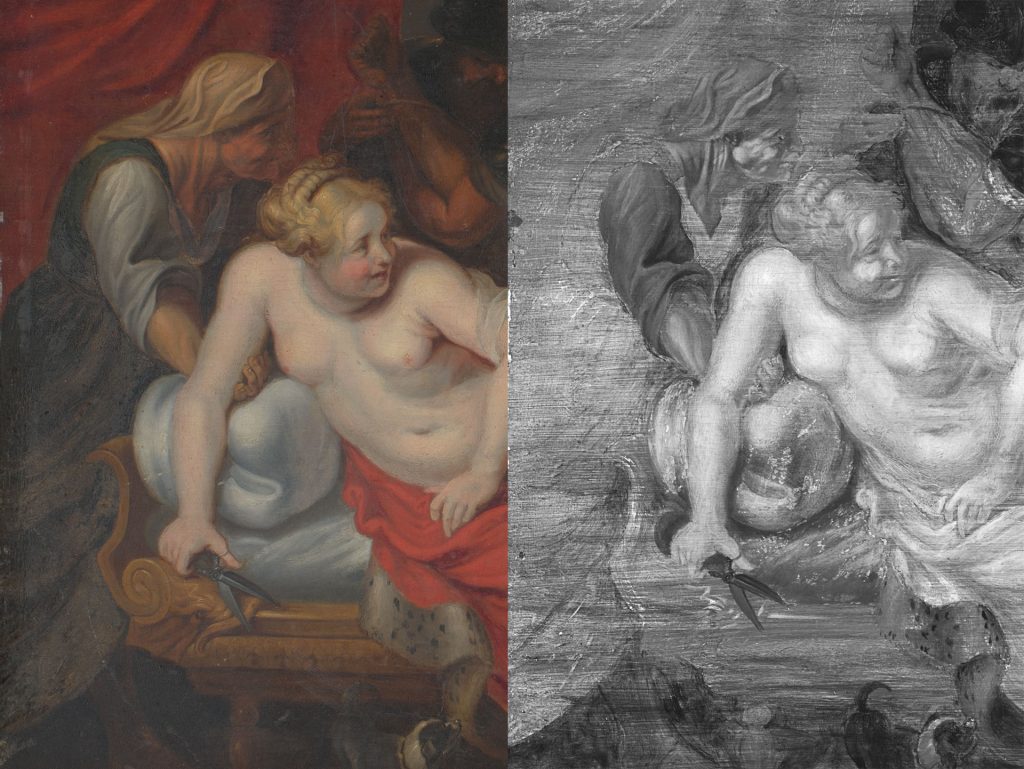
Infrared reflectography
This provides valuable information about possible underlying drawings, such as preparatory drawings or pentimenti (changes of mind) made by the artist, or during subsequent restorations or modifications of the work. Infrared imaging is therefore one of the most commonly used techniques in the study of works of art.
2. Ultraviolet
The techniques related to the ultraviolet band, below 400nm, can be divided into two categories:
- First, there is what we know as ultraviolet fluorescence: we illuminate the work with ultraviolet-rich light and document any fluorescence in the visible spectrum. This is the most common technique for studying varnish layers, including their condition, continuity and cleaning.
- Second, ultraviolet reflectography is photography carried out in the ultraviolet band. It plays a very important role in recovering handwritten texts on parchment and in document examination in general, as well as in identifying overpainting and interventions on works of art.
3. Multispectral imaging and image analysis
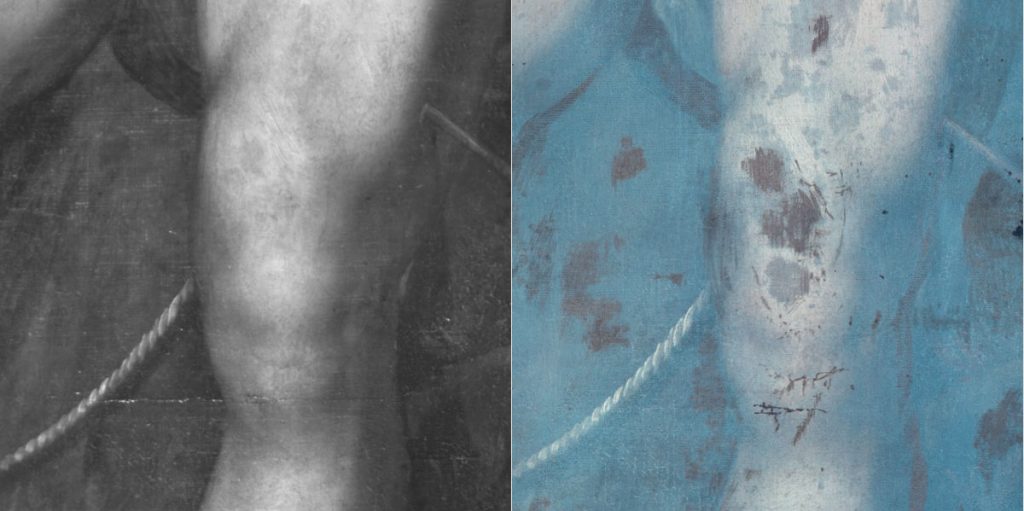
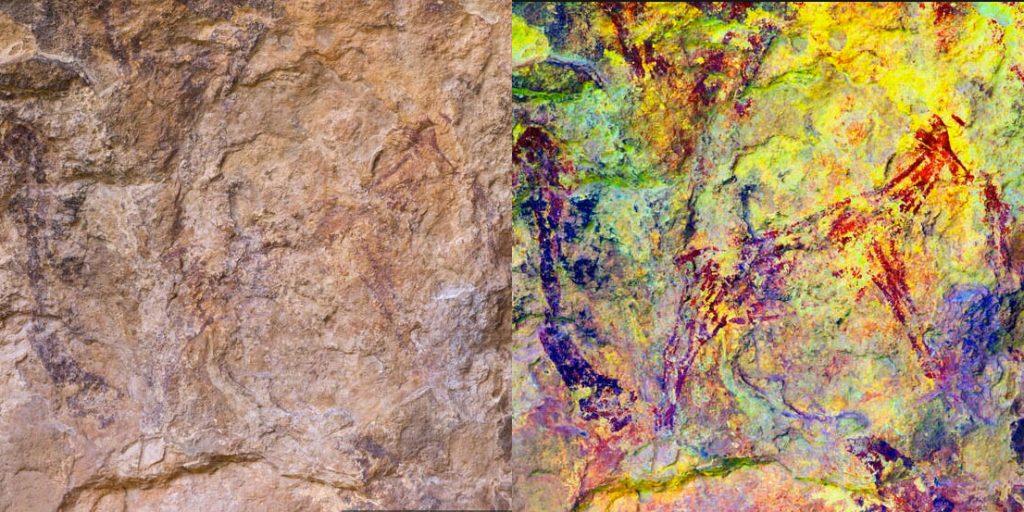
Working with individual bands—color, infrared or ultraviolet—often does not provide sufficient or readily understandable information to investigate the phenomenon we want to document. Multispectral imaging captures images across several bands, which we normally analyze using statistical techniques to extract information that is not readily visible in any individual band. Combined with image analysis, multispectral imaging reveals aspects of a work of art or cultural property that are not visible to the naked eye or are very difficult to understand.
4. Ionizing radiation.
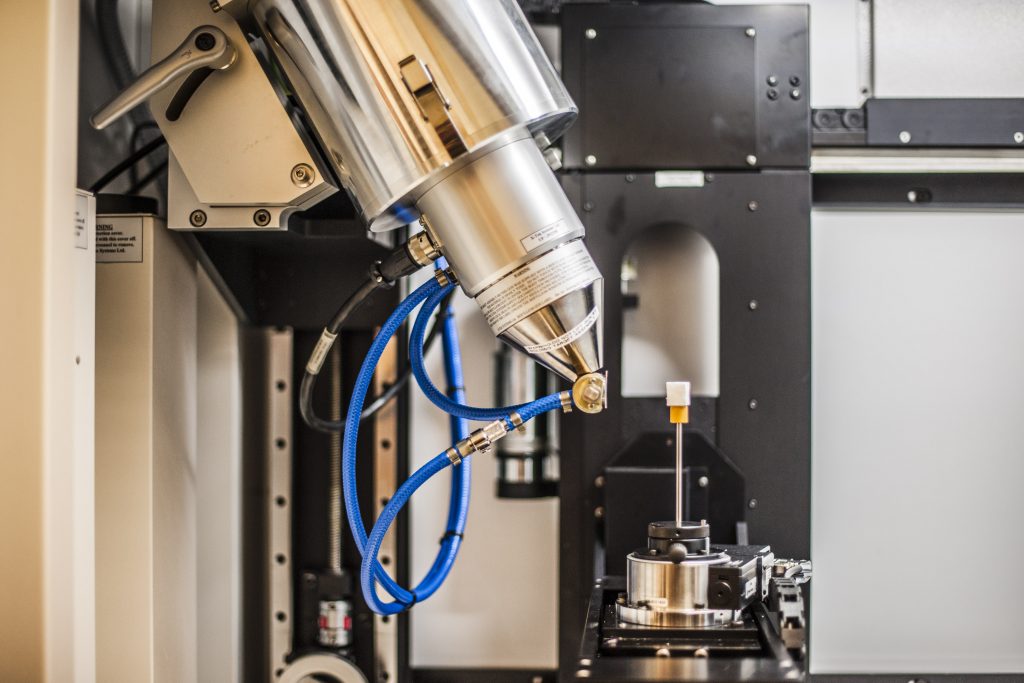
These include X-ray techniques, which can penetrate works of art and cultural property and provide a precise view of their internal structure. This work is carried out in collaboration with technicians and centers specializing in the technique. It often requires moving the work, although we also have portable equipment.
Three-dimensional techniques
These are techniques used to model or reconstruct a work in three dimensions, normally using photogrammetry to produce a three-dimensional model or an orthoimage.
Three-dimensional documentation provides valuable measurements and allows us to precisely describe the morphology of a cultural object, improving our understanding of it.
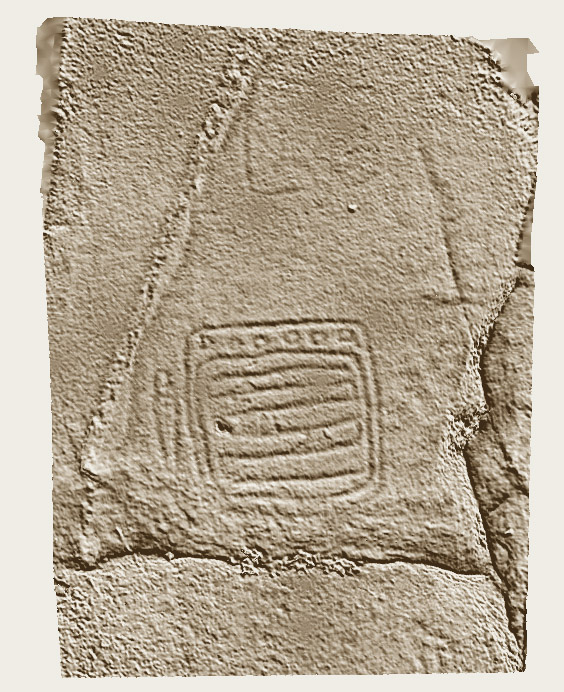
Three-dimensional documentation therefore has two fundamental uses:
- Conducting studies over time, to assess the structural stability of a cultural asset. A three-dimensional model is created at one point in time and another at a later date. The two models are superimposed and the metric differences between them are calculated, making it possible to identify potential dimensional changes, material losses, etc.
- Obtaining precise metric information about a cultural asset, whether for documentation purposes or in preparation for an intervention. For example, orthoimages—that is, images corrected for perspective—are commonly generated to provide precise metric information about sculptures or reliefs, but are equally useful for paintings.
Project reports
All work carried out on cultural assets or works of art is accompanied by a comprehensive report describing the procedures, standards, criteria and quality control tests used during the project. These project reports, often called “condition reports”, are mandatory or, at the very least, highly recommended. They help us understand the work through the techniques applied to it and become part of the documentation that describes and helps us understand a work of art, from its authorship to its state of conservation. They are essential for the sale or auction of any work of art.